
Last updated: November 2026
Across Europe, the paper or PDF invoice is on its way out for business purchases. Country after country is making structured e-invoices mandatory between businesses, and the EU has set a path for all member states to follow.
Most of the conversation is about invoices that flow between companies' finance systems. But there is one place almost nobody is talking about: the checkout.
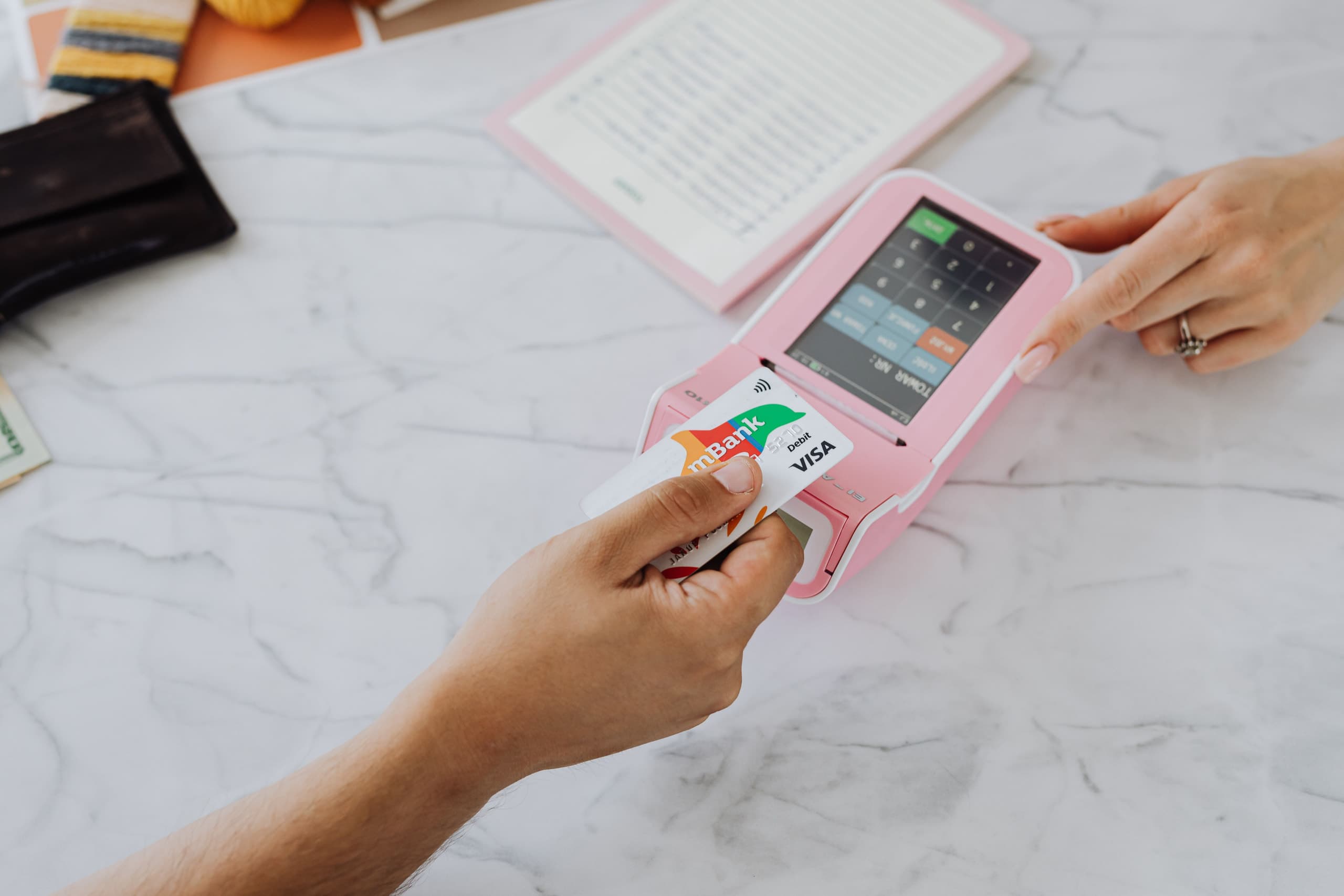
Every day, business customers buy fuel, tools, meals, hotel stays and supplies at a till or payment terminal. They walk away with a receipt, not an e-invoice. As the mandates tighten, that gap becomes a real problem for merchants, their business customers and the payment providers in between.
Who Requires B2B E-Invoicing, and When
Six EU countries already require domestic B2B e-invoicing, and at least eight more European markets have set or planned dates by 2030. Since April 2025, the EU's VAT in the Digital Age (ViDA) package lets member states introduce domestic mandates without asking Brussels for permission. From 1 July 2030, structured e-invoices (EN 16931) become mandatory for cross-border B2B trade within the EU.
- Already live: Italy (2019), Romania (2024), and Belgium, Croatia, Greece and Poland (all 2026).
- Rolling out now: France from September 2026, with small businesses following in 2027, and Germany from January 2027 for businesses above €800,000 turnover, then everyone in 2028.
- Coming next: Norway (2027), Spain (October 2027 for the largest firms, everyone in 2028) and Latvia (2028).
- Planned: Ireland (2028), the UK (2029) and the Netherlands (2030, still a draft).
- EU-wide: cross-border B2B e-invoicing becomes mandatory from 1 July 2030 under ViDA.
Finland, Sweden and Denmark are moving more slowly, with no general mandate yet, although Finnish businesses have been able to demand EN 16931 e-invoices from suppliers since 2020. Sweden has already approved digital receipts for bookkeeping. Status as of November 2026; dates change often, so check the latest rules for each market.
Why the Checkout Is the Hard Part
E-invoicing works well when both sides are finance systems. At the checkout, nearly everything about the moment works against it.
- The seller doesn't know it's a B2B sale. A business customer paying for fuel or tools looks exactly like a consumer. Nothing tells the till to issue an invoice instead of a receipt.
- The buyer's details aren't there. A valid invoice needs the buyer's company name, address and often a VAT number. Nobody wants to type that in at a busy till, and staff can't stop the queue to do it.
- Low-value exemptions don't cover everything. Many countries exempt small receipts, such as Germany's small-amount invoices up to €250 and Spain's simplified invoices. But a tank of diesel for a van, a hotel stay or a load of building supplies quickly goes above those limits.
- Tills print receipts, not structured invoices. Each market has its own format and network, from Peppol and KSeF to Factur-X and ZUGFeRD. Few point-of-sale systems can produce any of them.
Today the workaround is manual. The customer asks for an invoice at the counter, someone keys it in later, and a PDF arrives by email. In markets with a mandate, that PDF no longer counts.
The Fix: Start With the Receipt
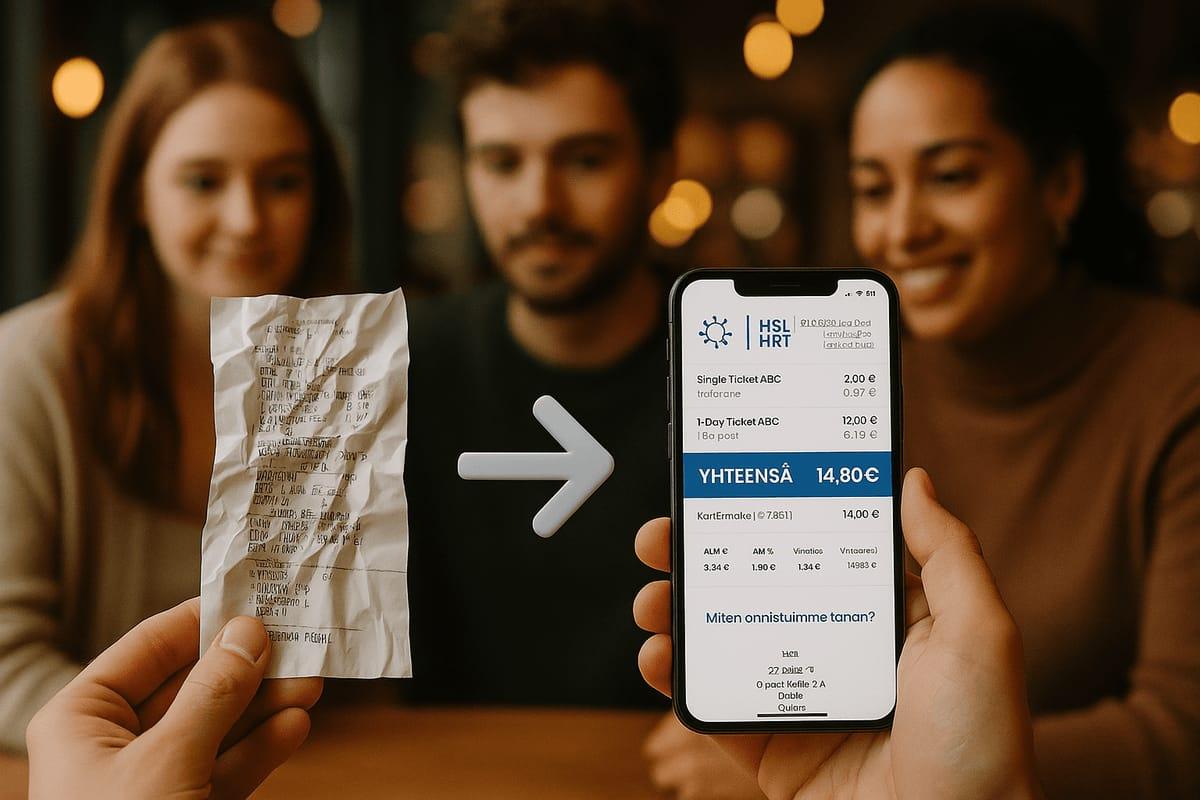
The receipt already holds everything a compliant invoice needs from the seller: items, prices, VAT, date and the merchant's details. What's missing is the buyer. So instead of slowing down the checkout, turn the receipt into the starting point for the e-invoice.
This is the flow we're building with our partners:
- Pay as usual. The customer pays by card or cash, and the checkout works exactly as it does today.
- Get the digital receipt. It arrives through a QR code or NFC tap at the terminal, or automatically when the card is linked.
- Tap "Get e-invoice". The business buyer adds their company details once. Next time, at any merchant, their saved profile fills it in.
- The e-invoice is created and delivered. It's generated from the receipt in the format each market requires, validated, sent to the buyer and archived for the merchant.
The merchant doesn't change the checkout, and the buyer doesn't fill in forms at the till. Tax authorities are moving the same way: in Germany, the Finance Ministry's guidance allows the till receipt to be issued first and corrected afterwards with an e-invoice.
What It Means for Payment Providers and Merchants
The payment terminal is the one place every in-store B2B purchase passes through. That makes it the natural home for e-invoicing at the checkout.
- For payment providers: one integration can serve merchants in every market as mandates arrive, instead of each merchant solving it alone. It's a new value-added service on top of payments. In Germany, the same integration also covers the 2028 digital receipt law.
- For merchants: business customers get the invoices they need without extra work at the till, and the merchant stays compliant as rules change.
- For business buyers: no more chasing invoices or losing input VAT because a paper receipt doesn't qualify. And invoices generated straight from the till can't be faked like a photo of a receipt.
The mandates are arriving market by market, and the checkout will be one of the last gaps to close. If you're a payment provider or merchant preparing for it, get in touch with the ReceiptHero team to see the flow or join a pilot.